




This page contains projects of Harghita County Council that have received funding.
PROJECT RELATED NEWS

HARGHITA COUNTY COUNCIL
Project experience description
Main activities and objectives:
Harghita County Council is the local public administration of Harghita County with one President – elected directly by the citizens for a mandate of 4 years – and 30 County Councillors, including the two Vice-Presidents of the county council.
In brief, the following activities and responsibilities belong to the action sphere of the county council and of its subordinated institutions:
- Responsibilities related to county-level infrastructure and public procurement, preservation of cultural patrimony and historical monuments, urban planning assistance and construction certification;
- Investments and economic development, international, EU-funded and structural projects’ management;
- Development and implementation of county-level programs in several fields of interest: culture, youth, religion, schools, civil society, social assistance, health, agriculture, rural development, tourism, mountain rescue and mountain area development, library, arts and registrar;
- County-level event organization and protocol, relations with the mass media, human resources, international relations and coordination of the local public authorities of the county.
The main EU projects completed or being carried out by Harghita County Council:
2021-2027
- Sustainable Rural Cyclotourism – Development of rural areas through youth entrepreneurship in cycle tourism, an Erasmus+, KA105 project (2021). The project allowed participants to improve their skills and abilities in the field of sustainable tourism in rural areas, improving the local economy in the hospitality sector. Furthermore, it helped unemployed young people in rural areas to promote a professional opportunity through sustainable rural tourism, strongly re-evaluating their sense of belonging and their roots in their place of origin, contrasting the current depopulation of rural areas. The lead partner was the Ajuntament de l’Orxa from Spain.
- 7SMART Steps – Seven SMART Steps to Adapt Digitally Supported Differentiated Learning Methodology to Increase Problem-Solving and Text Comprehension Competencies, in the framework of the Erasmus+ programme, KA226, in 2021-2023. The objective of the project is to empower schools and teachers with a full adaptation process they can get through to use SMART e-Maths methodology at different levels (as a teacher, as a content developer, or as a SMART Mentor). Through the adaptation processes, larger numbers of stakeholders got access to innovative, digitally supported methodology they can use in classrooms, after-schools, and homework assignments to support differentiated learning. The lead partner was the Interregió Fórum Egyesület from Hungary.
- EDU2030: Youth in Transition, within the Erasmus+ KA220-YOU – Cooperation partnerships in youth programme, in 2022-2023. The project wants to contribute to the localization of the 2030 Agenda with a bottom-up and sociocratic method of participation. The lead partner was the “Io, Noi” Associazione di Volontariato per la solidarietà e l’integrazione sociale from Italy.
- DIGIT-HR – Online services to facilitate interaction with the citizens of Harghita County, a project of Harghita County Council in the framework of the Operational Programme Administrative Capacity, in 2022-2023. The general objective of the project was to develop a high-performance management and facilitate access to the services offered by the Harghita County Council, by reducing bureaucracy, increasing the efficiency, transparency and integrity of the services offered to citizens as a result of the implementation of an electronic services platform for the citizens of Harghita County – DIGIT HR. The lead partner was the Harghita County Council.
- 2022-RO-CAP-ACT – CAPactivities 2022 – Information measures to make CAP more accessible and popular, a grant within the IMCAP-2022-INFOME call of the European Commission, in 2022-2023. The project aims to turn information related to CAP into something more accessible and intelligible for the large public. Citizens still ignore its contribution to the agri-sector, to support farmers and consumers. The project’s activities over 12 months focused on improving general knowledge of the large public about priorities and measures of CAP and fight fake news through conferences about the CAP, opportunities it provides after reform and also its future path. The lead partner was the Development Agency of Harghita County.
- Green Youth Empowerment: Green Jobs for Greener Europe – within the Citizens, Equality, Rights and Values Programme (CERV), in 2022-2024. The main goal of the project was to empower youth for Future Green Jobs within the Green European society as civic response to COVID19 crisis. One of the objectives of this project was to promote debate and youth reflection and participations in decision making on the future of green Europe and green jobs on the local, national and international level. The lead partner was the Podjetniski Inkubator Kocevje from Slovenia.
- EDUBOT – Developing Key Competencies Through Blended-Learning Methodology Based on AI-Supported Chatbot Technology, within the Erasmus+ programme, in 2022-2024. The project promotes the use of innovative educational tools in primary, secondary and vocational education, the strengthening of entrepreneurship, supporting innovative pedagogical methodologies such as project-based education and differentiated instruction with digital solutions specific to the field. The lead partner was the Interregió Fórum Egyesület from Hungary.
- CiBioGo – Citizen Participation in Biodiversity Governance – in the framework of the Interreg Europe Programme, in 2023-2027. As a result of CIBioGO partner regions will have increased knowledge on participatory governance methods in biodiversity and increased capacities to facilitate effective governance of protected areas. The lead partner is the Province of Potenza from Italy.
- SECON – Social Economy – Regional Policies for supporting Social Economy Enterprises – in the framework of the Interreg Europe Programme, in 2023-2027. The project aims to support EU regions to exchange experiences and improve policies based on identified best practices for supporting and scaling up the social economy, with a focus on rural settings. The lead partner is the Region of Peloponnese from Greece.
- SPUR – Social Post-Covid Urban Revitalization – in the framework of the CERV program, Networks of Towns, in 2024-2026. The SPUR project aims to connect 6 local authorities in 5 different Member States in a network of towns designated to work together on the issues of civic participation and tackling inequalities that affect their respective suburbs, reflecting on mid- and long-term effects of the pandemic. The lead partner is ALDA – European Association for Local Democracy from France.
- SAFETY4TMF – Coordinated prevention and disaster management activities on Tailings Management Facilities by authorities, municipalities and other stakeholders for solutions reducing transnational risks and hazards, within the Danube Region Programme, in the period of 2024-2026. SAFETY4TMF aims to enhance prevention, preparedness and disaster management activities of potential transnational risks related to Tailings Management Facilities in the Danube River Basin. The lead partner is the Ministry of Public Administration and Regional Development from Hungary.
- SEE – Sustainable Entrepreneurship Education, within the Interreg Europe programme, in the period of 2024-2028. The SEE project aims to improve regional policies and programmes for sustainable entrepreneurship education. The project will identify, analyze, disseminate and transfer good practices in five complementary areas. It also aims to nurture a culture of sustainability among tomorrow’s entrepreneurs, which goes far beyond a purely economic dimension. The lead partner is BGE Hauts de France.
- Food Savers – Food Waste Prevention in Harghita County within the Single Market Programme, SMP-FOOD-2023-FW-STAKEHOLDERS-AG call, in the period of 2024-2026. By raising awareness among the general population, training food-service providers and fostering sustainable business models, the project advances resource efficiency, sustainable production and consumption. The lead partner of the project is Harghita County Council.
- Arts&AI – an Erasmus+ project, implemented in 2024-2025. The main objective is to develop the skills of young local artists so that AI becomes not an adversary but a tool in their work, as well as to transform learning into an experience that enriches cultural and artistic activities through feedback and collaboration.
- Rural EU – within the CERV programme, in 2024-2026. The main objective of the project is to support the involvement and active participation of citizens from rural areas in cooperation with local authorities, strengthen the role of rural communities in promoting European citizenship, foster public-private cooperation between rural local authorities and organizations in the third sector to enhance the visibility of beneficial rural practices in the EU, and encourage youth participation. Lead partner: Associazione di Promozione Sociale Maghweb (IT).
- DiMaND – Disaster Management Network in the Danube Region, in the framework of the DG ECHO Knowledge Network Call to support the implementation of EUSDR PA5 Action Plan and achieve the objectives of PA5 DM-WG, in 2021-2022. The main goal of the project is to support the implementation of PA5 DM-WG objectives. This project directly supports the implementation of EUSDR. The lead partner is the Budapest Firefighter Association from Hungary; Harghita County Council is participating as an associated partner.
- Village Verve – a CERV Network of Towns project, in 2024-2026. The project aims to empower rural women to address the challenges posed by climate change in their communities. Recognizing the pivotal role of women in agriculture and environmental stewardship, the project focuses on raising awareness, providing education and training, and fostering meaningful participation in decision-making processes.
- AVETE – an Erasmus+ project within the ERASMUS-EDU-2024-POL-EXP call, 2025-2027. The main objective of the project is developing ecosystems consisting of educational, industry and social representatives mutually supporting each other in internationalization, sending-hosting organization matchmaking and capacity-building.
- EASI – Erasmus+ project within the ERASMUS-EDU-2024-POL-EXP call, 2025-2027. The project targets two essential components of the VET mobility programs: the in-company tutors’ role and the necessity of clear, measurable and quality assessments and evaluation processes. The project aims to strengthen tutors’ and organizations’ capacities and improve the impact of international students’ mobility experience. The project also supports national-level measures to support sustainable partnerships, especially those between the public and private sectors, and facilitates the understanding of EU tools for assessments.
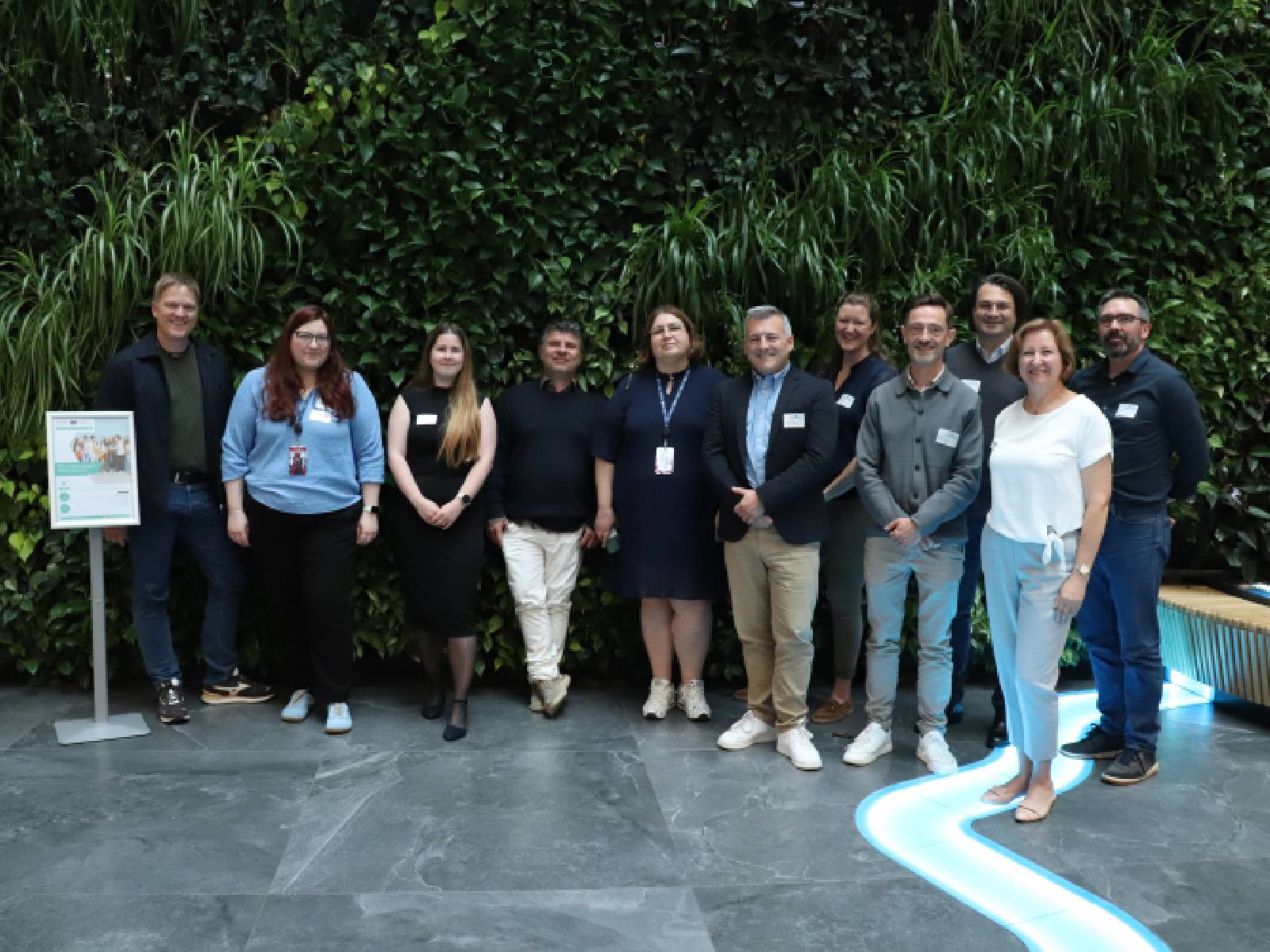
- PATHS – Personalized Approach to Territorial Life and Career Support, within the Danube Region Programme, 2025-2028. The general objective of the project is to develop accessible, inclusive, high-quality services at municipal level, strengthening lifelong learning and the retention capacity of rural areas, by developing and expanding the existing institutional and professional capacities.
2014-2020
- CD-ETA – Collaborative Digitization of Natural and Cultural Heritage – in 2016-2022, in the framework of the Interreg Europe Programme. The main objective of the project was improving natural and cultural heritage policies. Harghita County Council participates as a partner; the lead partner of the project was Euroregion Pleven-Olt from Bulgaria.
- RuralGrowth – increasing competitiveness of SMEs in the rural visitor economy sector, in the framework of the Interreg Europe Programme, in 2016-2022. The main objective of the project is improving SMEs competitiveness policies. Lead partner: Local Government of Nagykanizsa (Hungary).
- CAPacity building in rural areas for sustainable agriculture development – in the framework of the call for proposals “Support for information measures relating to the common agricultural policy (CAP)” for 2016 (2015/C 351/09). The aim of the project is to inform the population, and especially farmers from the participating areas, about CAP 2016, in order to assure the sustainable development of agriculture and rural areas. Harghita County Council is the lead partner of the project.
- EU3doms – Debate on the Future of the Four Freedoms of the European Union – a Europe for Citizens project (2.2. Network of Towns) in 2016-2018 which aims to launch a series of debates on the future of Europe with a special focus on the four freedoms of the EU. These are relevant for all partners to establish long-term cooperation for the exchange of experiences through intercultural dialogue. Harghita County Council participates as a partner in the project.
- INSiGHTS – INtegrated Slow, Green and Healthy Tourism Strategies – in the framework of the Danube Transnational Programme, PA2 Environment and culture responsible Danube region. The lead partner is Pons Danubii European Grouping of Territorial Cooperation from Slovakia. The objective of the project is fostering sustainable utilization of natural and cultural heritage in order to preserve and upgrade intact local resources providing outstanding potential to make regions attractive destinations for healthy and slow tourism.
- ENSIE – European Network for Social Integration Entrepreneurship: social inclusion and development of rural regions for a better European future – in the framework of the Europe for Citizens programme, Network of Towns sub-programme, in 2017-2018. The lead partner of the project is the Municipality of Fiľakovo from Slovakia. The goal of the ENSIE project is to create an international network for knowledge sharing in the field of Social Integration Enterprises.
- RURITAGE – Rural regeneration through systemic heritage-led strategies, in the framework of Horizon 2020, SC5-21-2016-2017 programme in 2018-2022. RURITAGE establishes a new heritage-led rural regeneration paradigm able to turn rural areas into sustainable development demonstration laboratories, through the enhancement of their unique CNH potential. The project identified 6 Systemic Innovation Areas (pilgrimages; sustainable local food production; migration; art and festivals; resilience; and integrated landscape management) which, integrated with cross-cutting themes, showcase heritage potential as a powerful engine for economic, social and environmental development of rural areas. The lead partner is Alma Mater Studiorum – Università di Bologna.
- E-COOL – Entrepreneurial and Intrapreneurial Mindset in Young People through the Dynamisation of Competences, Teaching Methodologies and Entrepreneurial Ecosystem – in the framework of the Interreg Europe Programme, in 2018-2023. This project identified and exchanged – through a quadruple helix approach – good practices for creating friendlier entrepreneurial ecosystems and actions to boost entrepreneurship in young people’s mindsets. The lead partner was the Official Chamber of Commerce, Industry and Shipping of Seville.
- CAPTION – CAP Information Measures for Sustainable Food Chain – a grant under call for proposals (2017/C 339/07) concerning information measures relating to the common agricultural policy. The activities of the project contributed to the fulfilment of the objectives of the European Union grant programme through the translation of CAP objectives and priorities to the level and language of citizens. Implementation period: July 2018 – June 2019. Harghita County Council is the lead partner of the project.
- Youth&SPA – Activating and involving the YOUTH in shaping the future of rural SPA towns – an Erasmus+ KA3 project, Support for policy reform, implemented in 2018-2019. The main aim of Youth&SPA was to launch a transnational and intergenerational dialogue among young people and decision-makers to identify good practices, formulate a Youth Strategy and recommendations to make small spa towns in rural regions more attractive for young people. The lead partner is the Municipality of Hévíz, Hungary.
- FRiDGE – Development of food industry SME competitiveness for better potentials in growth – in the framework of the Interreg Europe Programme, in 2019-2022. The project deals with one of the most important aspects of European food and drink industries: SME competitiveness. In order to support the food and drink sector to keep its position on the world market, the partnership seeks to contribute through interregional policy learning, promotion of good practices and leveraging interregional experience exchange by improving relevant operational programmes and regional policies. The lead partner of the project is Tolna County Development Agency Nonprofit Public Benefit Ltd.
- Local Flavours – Authentic tourism based on local cultural flavours – in the framework of the Interreg Europe Programme, in 2019-2022. Local Flavours’ objective is to improve policies supporting places unable to fully exploit their cultural legacies due to less advantaged locations. The project helped partners meet the challenge of identifying the most effective ways to support unique local sites with an innovative analysis toolkit, extensive knowledge sharing and assisted interaction with local public and private stakeholders. The lead partner is the Institute of Advanced Studies Kőszeg, Hungary.
- CAFHR – a project of Harghita County Council in the framework of the Operational Programme Administrative Capacity, in 2019-2021: implementing in the institution of Harghita County Council the Common Assessment Framework (CAF), a self-evaluation quality tool for the public sector. Harghita County Council is the lead partner of the project.
- Talent Magnet – Improved Institutional Capacities and New Multilevel Governance for Talent Attraction and Retention in the Danube Region – in the framework of the Danube Transnational Programme, in 2020-2022. The project addresses major societal (demographic and labour market) challenges caused by the outmigration of highly educated young people, primarily from small- and medium-sized towns in the Danube Region (brain drain). The project intends to address these challenges through improved multilevel governance, targeted policy instruments and practical tools to attract and retain talent. The lead partner is Scientific Research Centre Bistra Ptuj, Slovenia.
- Dream Road – Danube REgion for improved Access and eMpowerement of ROmA Development – in the framework of the Danube Transnational Programme, in 2020-2022. The project seeks to empower members of Roma communities to become agents of change. Participatory development of novel interventions to enhance digital, information and functional literacy of Roma people and establishment of broad alliances in their implementation are key results of the project. The lead partner is Research and Educational Centre Mansion Rakičan, Slovenia.
2007-2013
- ROBINWOOD PLUS – an Interreg IVC programme, in 2010-2013. Main topics: sustainable forestry and competitive timber industry; promotion of the multifunctional role of forests as an engine for economic development, environmental protection and improvement of quality of life in rural areas. Robinwood Plus aimed to exchange experiences between partner regions in order to stimulate and sustain economic and social regeneration of rural areas through participatory and sustainable forest management.
- CLEAR, in the framework of the South-East Europe Programme, in 2011-2014. The project aimed to promote cultural values and tourist destinations in the county and other South-East European regions, making them accessible not only at national but also at international level. It sought to ensure inclusivity for all social groups, as reflected in the project’s title: “Cultural Values and Leisure Environments Accessible Roundly – for All.” Harghita County Council participated as a partner.
- FIDIBE, in 2009-2012, in the framework of the ERDF – South East Europe Programme. The main objectives of the project were to increase innovation potential and competitiveness in the South East Europe region by supporting and developing SMEs, promoting the spirit of innovation and entrepreneurship, developing economic knowledge and reducing regional disparities. Harghita County Council participated as a partner.
- CIVPro – Civil Protection – an Interreg IVC programme, in 2010-2012. The objective of the project is the exchange and sharing of know-how on the development of regional policies and on a strategic approach and model to prevent and reduce any potential threat and damage inflicted on people, property, environment and society as a whole by accidents and disasters, including both natural and manmade disasters. Harghita County Council was involved as a partner.
- RECULTIVATUR – a South East Europe programme. The main aim of RECULTIVATUR is to use the cultural, religious, tangible and intangible heritage values within the territories, jointly with local assets, human resources, infrastructure and services, to develop religious tourism opportunities and contribute to social and economic growth. Duration: January 2011 – June 2014. Harghita County Council participated as a partner.
- Harghita County Council received a grant from the Youth in Action EU programme in 2012 for the Youth in Harghita 2020 Conference – Project Identification number RO-51-E4-20R-R1. The aim of the project was to prepare the “Youth in Harghita 2020” Strategy for Harghita County.
- CCIC – Complex Challenges Innovative Cities, in 2012-2014 in the framework of the Interreg IVC programme. Lead Partner: Sofia Municipality (BG). The CCIC project’s main objective is to improve regional policies by enhancing innovation in the public sector and increasing collaboration between local and regional authorities, public entities and other stakeholders. By exchanging good practices, the partners addressed a set of interlinked challenges faced by public authorities and related to innovation in the public sector, such as public finance for innovation, public authorities as innovators and innovation stimulators, public attitudes to innovation, and public procurement to support innovation.
- SEEMIG – Managing Migration and its Effects in South-East Europe – Transnational Actions Towards Evidence-Based Strategies. SEEMIG is a strategic project funded by the South-East Europe Programme. The project aimed to better understand and address longer-term migratory, human capital and demographic processes of South-East Europe, as well as their effects on labor markets and national and regional economies. The main goal of the project was to empower public administrations to develop and implement policies and strategies by using enhanced datasets and empirical evidence.
- ENGAGE – Enhancing Next Generation Access Growth in Europe, in 2012-2014 in the framework of the Interreg IVC programme. Lead Partner: NIVERLAN Joint Authority (FR). The objective of the ENGAGE project is to help its 12 public partners define the best economic model for developing Very High Speed Broadband Infrastructure in less populated regions, by developing an implementation plan for the deployment of High Speed Broadband (HSB) networks in the county.
- CREART – Network of Cities for Artistic Creation project, in 2012-2017, in the framework of the Culture 2007-2013 programme. The main objective of the project is to foster artistic activities and support artists’ mobility. Harghita County Council participates as a partner; the lead partner is Fundación Municipal de Cultura, Ayuntamiento de Valladolid – Spain.
- Young graduates and the Social Sector: developing new job opportunities – PROGRESS programme, in 2013-2014. The objective of the project was to identify opportunities and new job skill needs for young graduates in the social sector. The lead partner of the project was Fondazione CUOA – University Centre for Business Administration, Vicenza, Veneto Region, Italy. Harghita County Council was involved as a partner.


