


- STATUTUL UNITĂŢII ADMINISTRATIV-TERITORIALE
- “REGULAMENTELE PRIVIND PROCEDURILE ADMINISTRATIVE”
-
- Regulament de organizare și funcționare CJH
- Regulament de ordine interioară
- Dispoziție nr. 125/2024
- Dispoziția nr. 9/2025_ROI – modificare(Program de lucru)
- Dispoziție nr. 125/2024
- Integritate Instituțională
-
- HOTĂRÂRILE AUTORITĂȚII DELIBERATIVE
Pilot projects – an integrated approach to education for inclusion
Digitalization of education does not mean online education
On 12th October, within the European Week of Regions and Cities, Harghita County Council organized the event entitled #LocalAction4Education – Pilot project for digital education.
The event was moderated by Gyula Winkler, Member of the European Parliament, with the participation of Ms. Margrethe Vestager Executive Vice President of the European Commission as keynote speaker, as well as with further panelists: Mr. Alpár Ferencz Salamon director of the Teacher`s House of Harghita County, Mr. László Csák expert in European policies, Mr. Daniel Böjte expert in digitalization, Mr. Endre Borsos expert on digitalization of education, and Mr. Juraj Bilic Vice-CEO of the Croatian Academic and Research Network (CARNET).
The purpose of the event was to bring together the good practices, experiences, challenges which contribute to supporting education in all learning environments in order to reduce the digital gap in the less developed regions.
“During the COVID 19 pandemic schools, teachers, students and parents faced a new situation in which the traditional way of education was no longer possible and every entity and family had to find new solutions. For some of them, challenges consisted in organizing education at home, but for many, especially in less developed regions, such as in Harghita County, challenges started with the lack of equipment and internet connection. Harghita County Council took the initiative and established a working group for the digitalization of the education in Harghita County, which is operating with relevant actors and highly rated experts from the field of digital education, aiming primarily at solving urgent requests related to online education.” – added Csaba Borboly, president of the county council.
In order to have a long-term impact, the working group concluded that a holistic, regional, comprehensive and strategic approach is needed and elaborated the DigEdu2030 – Action plan for digital education, which proposes the launch of a pilot project for education digitization in Harghita County.
Margrethe Vestager, Executive Vice President of the European Commission, keynote speaker of the event, welcomed the initiative of the county council to implement a pilot project assuring their support in its implementation, at the same time appreciating that it is impossible to talk about inclusion without mentioning education and it is highly important to ensure access to learning and training for all in order to reduce gaps.
Digitalization of education and digitization in general has become a priority on European and national level, but financing sources/funding options for the implementation of comprehensive and multi-level pilot projects still lacks.
Mr. Alpár Ferencz Salamon director of Teacher`s House of Harghita County appreciated that the well-being of digitization is in tight connection with physical well-being and to reduce inequalities the implementation of such projects is necessary, which provides 21st century conditions.
Mr. Daniel Böjte expert on digitization highlighted the need to change the role of teachers and put the emphasis on learning, digital transformation of education without omitting the emotional component of this process with the aim of educating in the future.
As an example of good practice, Juraj Bilic Vice-CEO of the Croatian Academic and Research Network presented the pilot proiect of Croatia, implemented in two phases, his advice being to invest in robust and modern technologies which do not degrade over time. At the same time he concluded that digitization of education does not mean online education.
Mr. Endre Borsos expert on education digitization appreciated the contribution of Harghita County Council as an active partner in the implementation of several digital projects, such as 7 Smart Steps, Classy application, useful tools both for teachers and students for creating digital contents.
As a result of the event a Cooperation intent was signed between Harghita County Council, Teachers` House of Harghita County and Croatian Academic and Research Network, to find the means to implement the Local action plan for digital education, so that, as Mr. Csaba Borboly appreciated, to develop education in Harghita County in such way all children of all backgrounds to have equal changes to prepare for a digitalized future.
Miercurea Ciuc, 12th October 2022
59 hospitality venues received the Orange Butterfly certification
The certificates of the Myrmidone (orange butterfly) certification were awarded in a ceremonial event today, on September 16, at the Park Hotel in Miercurea Ciuc. The certification system is a flagship initiative of the Harghita County – European Region of Gastronomy 2027 program, recognizing conscious hospitality built on local ingredients, producers, and the gastronomic heritage of Harghita County.
A total of 67 hospitality venues applied for the 2026 certification, of which 59 met the conditions set out in the criteria system and the Code of Conduct. The certified venues include restaurants, bistros, and local gastronomic points, among them four establishments from Covasna County. Among the certified venues, eight received one butterfly, eleven received two butterflies, and forty received three butterflies.
Myrmidone is not simply about offering local dishes, but represents a comprehensive hospitality approach that connects stakeholders in the region from local producers and ingredients to the gastronomic experience of the guest. An important element of the certification is the use of ingredients and beverages sourced, where possible, from within a 100-kilometer radius, cooperation with local producers and making them visible, as well as preserving and transmitting the traditional gastronomic values of Harghita County. The system also pays attention to reducing food waste, the Signature Dish list of characteristic local dishes, and multilingual communication.
The certification is named after the strictly protected orange butterfly, Colias myrmidone. This rare species occurs in Europe only in Poland, Slovakia, and Romania, and within Romania it can be found in just two areas, including the Kürücök Valley near Lăzarea and Gheorgheni. The presence of the orange butterfly is a strong indicator of the region’s exceptional natural values, which are closely linked to the quality of local ingredients and the gastronomic heritage of Harghita County.
The Myrmidone certification is closely linked to the Signature Dish list. Within this initiative, which collects the characteristic dishes of Harghita County, a questionnaire survey was used to identify those dishes and desserts that the community considers most representative of the region. The results were evaluated together with twelve local chefs, leading to a selection of fifty highlighted dishes in the Signature Dish collection.
In the future, certified venues will benefit from using the Myrmidone visual identity and the Harghita County – European Region of Gastronomy 2027 logo, as well as enhanced visibility on Visit Harghita platforms, in the program’s communication, and on the region’s gastronomic map. The certification also provides opportunities for participation in various promotional and professional initiatives, including study visits, publications, newsletters, and professional events.
With the certificate award, a community has begun to take shape whose members work together to ensure that the local flavors, producers, gastronomic traditions, and hospitality venues of Harghita County are more prominently represented in the region’s tourism offer. The aim of the Myrmidone certification is that local values should not only appear on the plate, but come together as a comprehensive gastronomic experience that connects the local community, the natural environment, and hospitality.
European Region of Gastronomy
European Regions of Gastronomy (candidates and awardees), selected and managed by IGCAT, aim to contribute to improving the quality of life of their citizens by raising awareness of the importance of cultural and gastronomic uniqueness, while:
- encouraging creativity and gastronomic innovation,
- intellectually nourishing children and adults through culinary education,
- improving the quality of sustainable tourism,
- strengthening circular economies in both urban and rural environments,
- supporting the well-being and health of communities and the environment.
IGCAT provides the award with the support of international and European institutions. Regions also join the global platform of awarded and candidate Gastronomic Regions to promote long-term benefits, increase international visibility, and support knowledge sharing.
The European Region of Gastronomy title recognizes communities (cities, counties, regions, islands, or countries) that, in the spirit of sustainable development and through community cooperation, place strong emphasis on their gastronomic heritage. Preserving and protecting local food, drinks, agricultural products, as well as cultural and natural values, is of particular importance for them.
The title is a recognition that widely promotes the achievements, programs, community cooperation, and responses to future challenges of the given region, but it does not include a monetary prize.
Members of the Harghita County consortium:
- Harghita County Council
- Harghita Community Development Association
- Miercurea Ciuc City Hall
- Odorheiu Secuiesc City Hall
- Gheorgheni City Hall
- Association of Szekler Farmers’ Organizations
- Sapientia Hungarian University of Transylvania, Faculty of Miercurea Ciuc
- Páva KulinarIQum Association
- Boro Info
- Honline Media (Székely Konyha és Kert)
- Association of Ciuc Hospitality Providers
- Pro Economica Foundation
59 hospitality venues received the Orange Butterfly certification
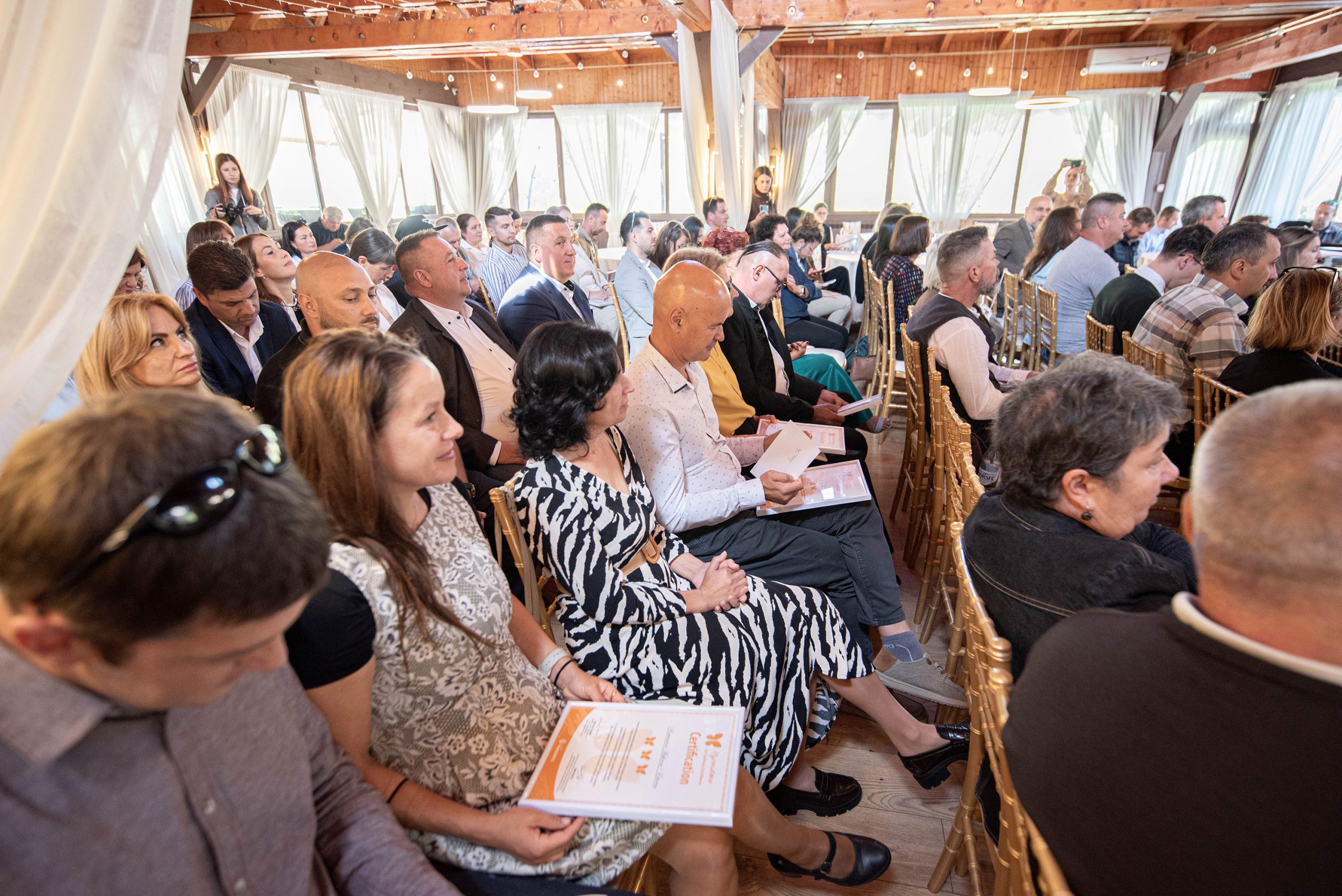
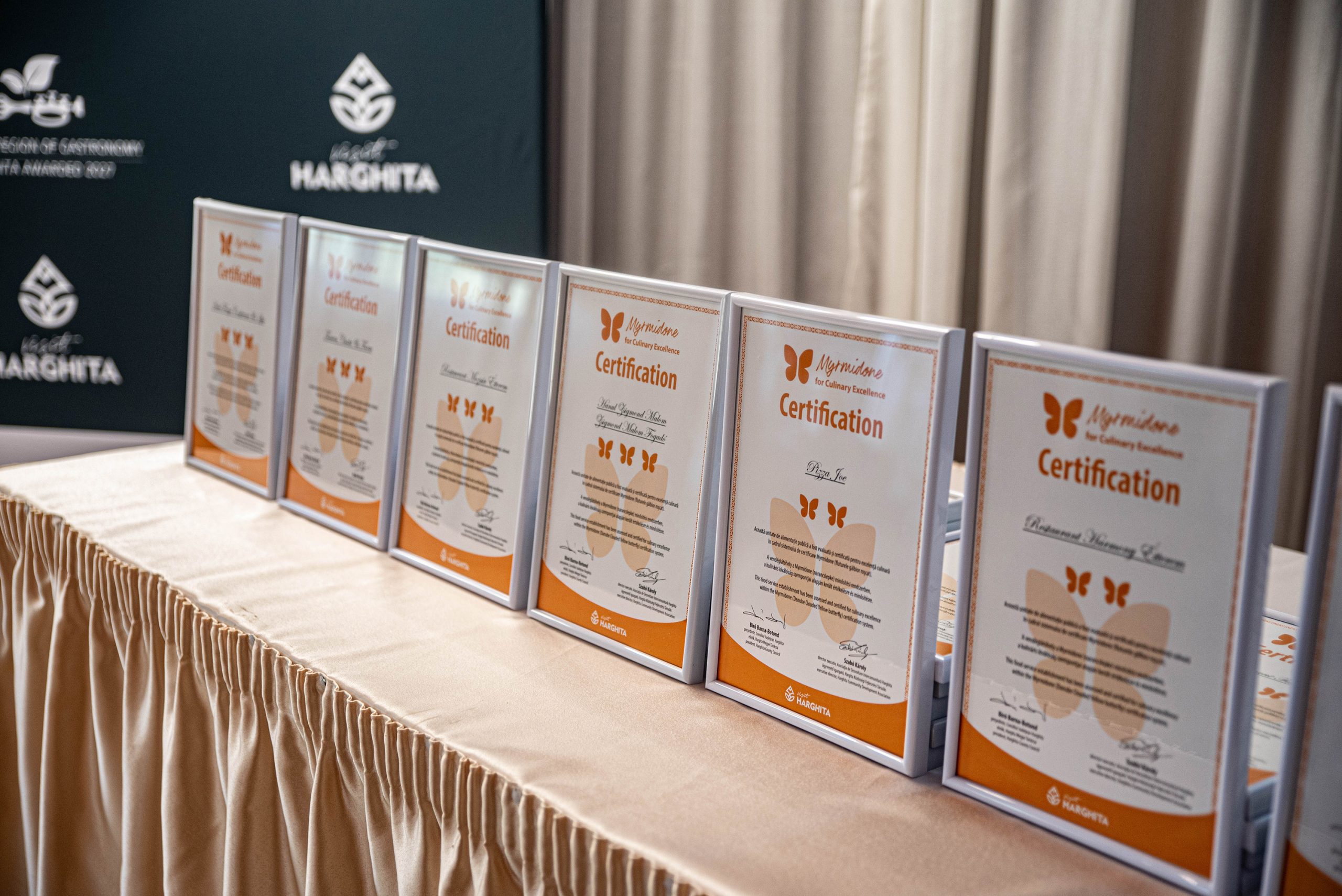
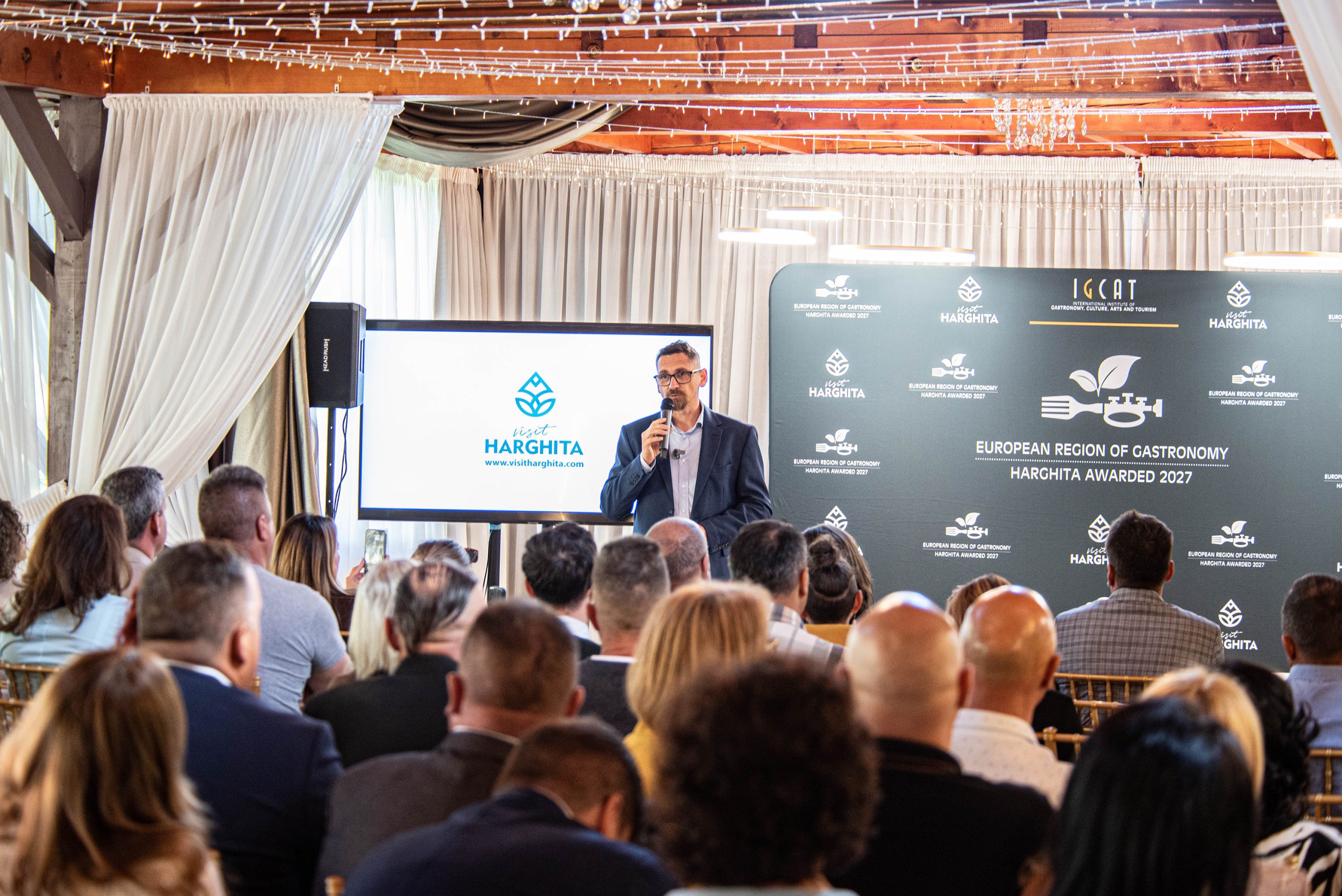
The certificates of the Myrmidone (orange butterfly) certification were awarded in a ceremonial event today, on September 16, at the Park Hotel in Miercurea Ciuc. The certification system is a flagship initiative of the Harghita County – European Region of Gastronomy 2027 program, recognizing conscious hospitality built on local ingredients, producers, and the gastronomic heritage of Harghita County.
A total of 67 hospitality venues applied for the 2026 certification, of which 59 met the conditions set out in the criteria system and the Code of Conduct. The certified venues include restaurants, bistros, and local gastronomic points, among them four establishments from Covasna County. Among the certified venues, eight received one butterfly, eleven received two butterflies, and forty received three butterflies.
Myrmidone is not simply about offering local dishes, but represents a comprehensive hospitality approach that connects stakeholders in the region from local producers and ingredients to the gastronomic experience of the guest. An important element of the certification is the use of ingredients and beverages sourced, where possible, from within a 100-kilometer radius, cooperation with local producers and making them visible, as well as preserving and transmitting the traditional gastronomic values of Harghita County. The system also pays attention to reducing food waste, the Signature Dish list of characteristic local dishes, and multilingual communication.
The certification is named after the strictly protected orange butterfly, Colias myrmidone. This rare species occurs in Europe only in Poland, Slovakia, and Romania, and within Romania it can be found in just two areas, including the Kürücök Valley near Lăzarea and Gheorgheni. The presence of the orange butterfly is a strong indicator of the region’s exceptional natural values, which are closely linked to the quality of local ingredients and the gastronomic heritage of Harghita County.
The Myrmidone certification is closely linked to the Signature Dish list. Within this initiative, which collects the characteristic dishes of Harghita County, a questionnaire survey was used to identify those dishes and desserts that the community considers most representative of the region. The results were evaluated together with twelve local chefs, leading to a selection of fifty highlighted dishes in the Signature Dish collection.
In the future, certified venues will benefit from using the Myrmidone visual identity and the Harghita County – European Region of Gastronomy 2027 logo, as well as enhanced visibility on Visit Harghita platforms, in the program’s communication, and on the region’s gastronomic map. The certification also provides opportunities for participation in various promotional and professional initiatives, including study visits, publications, newsletters, and professional events.
With the certificate award, a community has begun to take shape whose members work together to ensure that the local flavors, producers, gastronomic traditions, and hospitality venues of Harghita County are more prominently represented in the region’s tourism offer. The aim of the Myrmidone certification is that local values should not only appear on the plate, but come together as a comprehensive gastronomic experience that connects the local community, the natural environment, and hospitality.
European Region of Gastronomy
European Regions of Gastronomy (candidates and awardees), selected and managed by IGCAT, aim to contribute to improving the quality of life of their citizens by raising awareness of the importance of cultural and gastronomic uniqueness, while:
- encouraging creativity and gastronomic innovation,
- intellectually nourishing children and adults through culinary education,
- improving the quality of sustainable tourism,
- strengthening circular economies in both urban and rural environments,
- supporting the well-being and health of communities and the environment.
IGCAT provides the award with the support of international and European institutions. Regions also join the global platform of awarded and candidate Gastronomic Regions to promote long-term benefits, increase international visibility, and support knowledge sharing.
The European Region of Gastronomy title recognizes communities (cities, counties, regions, islands, or countries) that, in the spirit of sustainable development and through community cooperation, place strong emphasis on their gastronomic heritage. Preserving and protecting local food, drinks, agricultural products, as well as cultural and natural values, is of particular importance for them.
The title is a recognition that widely promotes the achievements, programs, community cooperation, and responses to future challenges of the given region, but it does not include a monetary prize.
Members of the Harghita County consortium:
- Harghita County Council
- Harghita Community Development Association
- Miercurea Ciuc City Hall
- Odorheiu Secuiesc City Hall
- Gheorgheni City Hall
- Association of Szekler Farmers’ Organizations
- Sapientia Hungarian University of Transylvania, Faculty of Miercurea Ciuc
- Páva KulinarIQum Association
- Boro Info
- Honline Media (Székely Konyha és Kert)
- Association of Ciuc Hospitality Providers
- Pro Economica Foundation
Pilot projects – an integrated approach to education for inclusion
Digitalization of education does not mean online education
On 12th October, within the European Week of Regions and Cities, Harghita County Council organized the event entitled #LocalAction4Education – Pilot project for digital education.
The event was moderated by Gyula Winkler, Member of the European Parliament, with the participation of Ms. Margrethe Vestager Executive Vice President of the European Commission as keynote speaker, as well as with further panelists: Mr. Alpár Ferencz Salamon director of the Teacher`s House of Harghita County, Mr. László Csák expert in European policies, Mr. Daniel Böjte expert in digitalization, Mr. Endre Borsos expert on digitalization of education, and Mr. Juraj Bilic Vice-CEO of the Croatian Academic and Research Network (CARNET).
The purpose of the event was to bring together the good practices, experiences, challenges which contribute to supporting education in all learning environments in order to reduce the digital gap in the less developed regions.
“During the COVID 19 pandemic schools, teachers, students and parents faced a new situation in which the traditional way of education was no longer possible and every entity and family had to find new solutions. For some of them, challenges consisted in organizing education at home, but for many, especially in less developed regions, such as in Harghita County, challenges started with the lack of equipment and internet connection. Harghita County Council took the initiative and established a working group for the digitalization of the education in Harghita County, which is operating with relevant actors and highly rated experts from the field of digital education, aiming primarily at solving urgent requests related to online education.” – added Csaba Borboly, president of the county council.
In order to have a long-term impact, the working group concluded that a holistic, regional, comprehensive and strategic approach is needed and elaborated the DigEdu2030 – Action plan for digital education, which proposes the launch of a pilot project for education digitization in Harghita County.
Margrethe Vestager, Executive Vice President of the European Commission, keynote speaker of the event, welcomed the initiative of the county council to implement a pilot project assuring their support in its implementation, at the same time appreciating that it is impossible to talk about inclusion without mentioning education and it is highly important to ensure access to learning and training for all in order to reduce gaps.
Digitalization of education and digitization in general has become a priority on European and national level, but financing sources/funding options for the implementation of comprehensive and multi-level pilot projects still lacks.
Mr. Alpár Ferencz Salamon director of Teacher`s House of Harghita County appreciated that the well-being of digitization is in tight connection with physical well-being and to reduce inequalities the implementation of such projects is necessary, which provides 21st century conditions.
Mr. Daniel Böjte expert on digitization highlighted the need to change the role of teachers and put the emphasis on learning, digital transformation of education without omitting the emotional component of this process with the aim of educating in the future.
As an example of good practice, Juraj Bilic Vice-CEO of the Croatian Academic and Research Network presented the pilot proiect of Croatia, implemented in two phases, his advice being to invest in robust and modern technologies which do not degrade over time. At the same time he concluded that digitization of education does not mean online education.
Mr. Endre Borsos expert on education digitization appreciated the contribution of Harghita County Council as an active partner in the implementation of several digital projects, such as 7 Smart Steps, Classy application, useful tools both for teachers and students for creating digital contents.
As a result of the event a Cooperation intent was signed between Harghita County Council, Teachers` House of Harghita County and Croatian Academic and Research Network, to find the means to implement the Local action plan for digital education, so that, as Mr. Csaba Borboly appreciated, to develop education in Harghita County in such way all children of all backgrounds to have equal changes to prepare for a digitalized future.
Miercurea Ciuc, 12th October 2022
4. “DISPOZIŢIILE AUTORITĂŢII EXECUTIVE”
5. “DOCUMENTE ŞI INFORMAŢII FINANCIARE”
- Situația funcțiilor din cadrul Consiliului Județean Harghita
6. “ALTE DOCUMENTE”


